
For a long time, electronic invoicing was seen as a purely regulatory issue: an obligation imposed by the state, a technical project to manage, an additional administrative irritant.
However, upon closer inspection, the Electronic Invoicing Reform (EIR) could very well become the best excuse to finally initiate a simple, structured, and useful digital transformation for your business.
And what if, instead of enduring it, you made it the starting point for a more efficient, smoother, better-managed organization?

Electronic invoicing: a “necessary evil” that solves very concrete problems
Let’s be honest: no one has ever woken up one morning thinking “Hey, what if I completely transformed my invoicing system today?”.
But every manager has already thought:
- Why do my reminders take so long?
- Why do my teams retype the same information three times?
- Why do my invoices get lost along the way?
- Why is my cash flow never 100% reliable?
Electronic invoicing provides direct answers to these everyday irritants:
- ➡️ An invoice sent = an invoice received, tracked, timestamped.
- ➡️ Fewer errors, fewer disputes, fewer endless discussions.
- ➡️ A more refined and predictive cash management.
In short: we save time, money, and peace of mind.
A unique lever to reset your internal processes
To comply, a company must:
- map its flows,
- understand all its invoicing scenarios,
- review its VAT rules,
- clean its customer/supplier data,
- clarify its validation circuits,
- interrogate its ERP, its CRM, its business tools.
In other words: the RFE requires opening the hood.
And that’s precisely where the opportunity lies.
👉 By observing what is malfunctioning, we often rediscover:
- duplicates,
- unnecessary rehashes,
- manual tasks with no added value,
- non-connected tools,
- processes that have become obsolete with the growth of the company.
The electronic invoice then becomes a legitimate excuse to do what has been postponed for years:
rationalize, simplify, connect, automate.
A catalyst for collaboration between finance, operations, and IT
Digital transformation often fails because it is managed like an IT project.
The RFE, on the other hand, requires doing the opposite.
- The ADV must document its actual flows.
- Purchasing must secure supplier data.
- Finance must manage tax compliance.
- Commerce must adapt quotes and contracts.
- IT must orchestrate integration and data.
This is a business transformation, not an IT project.
And this dynamic often triggers a profound cultural change:
- Teams start working together again.
- Data becomes an asset again.
- Performance becomes a shared topic again.
The first building block towards a modern and connected information system
Today, many SMEs operate with:
- a partially used CRM,
- a not fully integrated ERP,
- critical Excel files,
- repetitive tasks,
- data scattered across multiple tools.
Electronic invoicing requires structuring:
- data (quality, format, completeness),
- les flux (devis → commande → livraison → facture → paiement),
- tools (ERP, CRM, approved platform, reporting).
This is the natural entry point to a more coherent IS:
➡️ a truly powered CRM,
➡️ a better-utilized ERP,
➡️ centralized customer data,
➡️ automated reminders,
➡️ a much more reliable financial management.
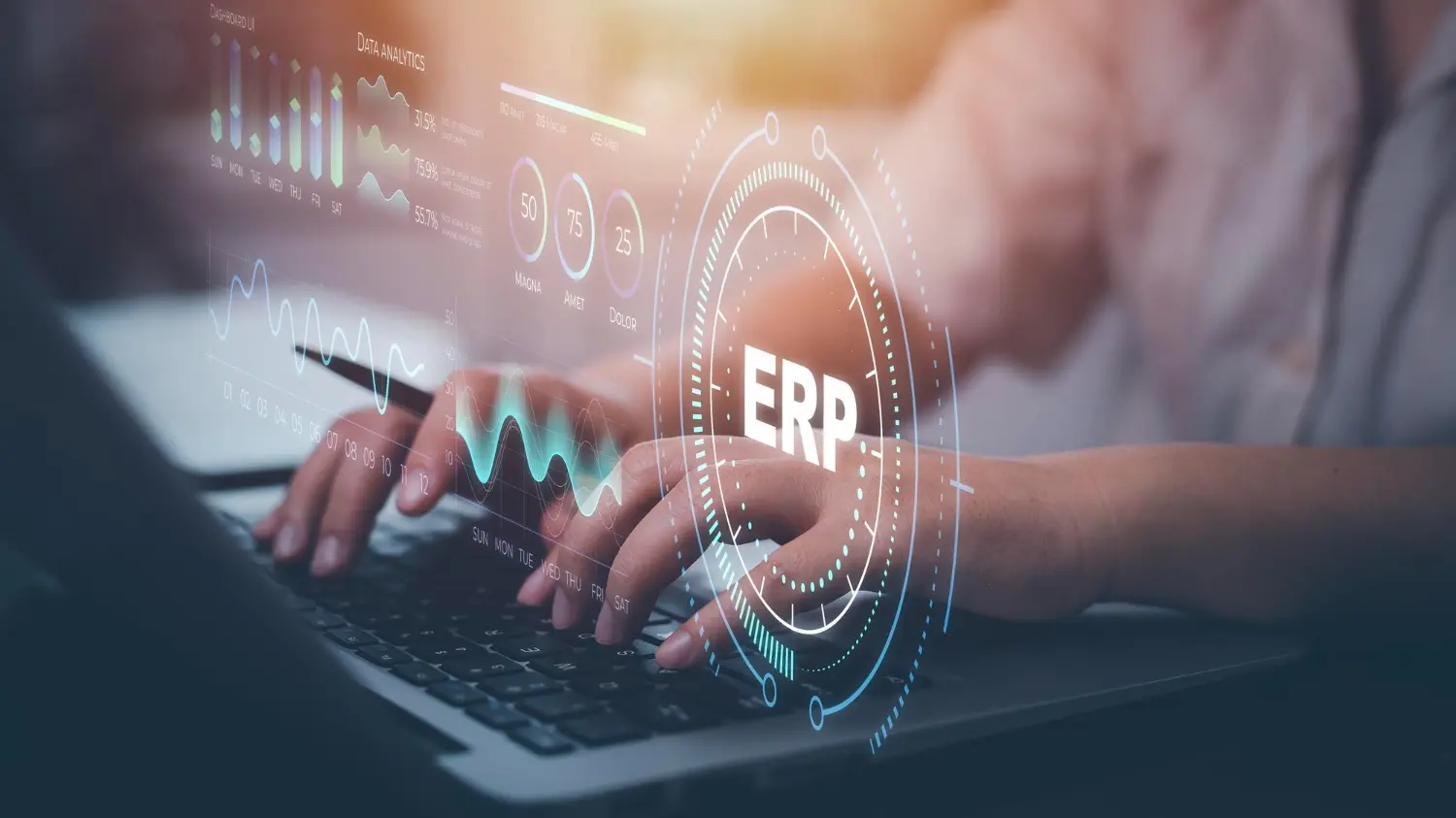
The RFE can become the foundation of a gradual, realistic, and controlled digitalization.
A rare opportunity to improve your cash flow and management
In a context of financial tensions, every day of payment delay counts.
With electronic invoicing:
- you know when the invoice is sent, received, accepted, rejected,
- your reminders can be automated,
- cash flow forecasting becomes more reliable,
- disputes are detected earlier,
- DSO decreases mechanically.
The reform then becomes a lever for economic performance, not just a compliance issue.
In summary: electronic invoicing is not a constraint… it’s a disguised opportunity.
If well managed, compliance can become the zero moment of a successful digital transformation.
- ✨ A moment when we reassess the processes.
- ✨ A moment when we reconnect the tools.
- ✨ A moment when we structure the data.
- ✨ A moment when we simplify the daily lives of the teams.
- ✨ A moment when finance takes the lead in performance.
Electronic invoicing is not a line on the tax calendar.
It’s a rare chance to sustainably improve the efficiency, fluidity, and profitability of your organization.
What if you chose to make it an accelerator rather than a constraint?
Ready to anticipate 2026?
Leave us your contact details to refine your needs
Nous proposons une analyse pour évaluer votre niveau de préparation.